
Economy
The Pakistan Stock Exchange: A Comprehensive Overview

Introduction
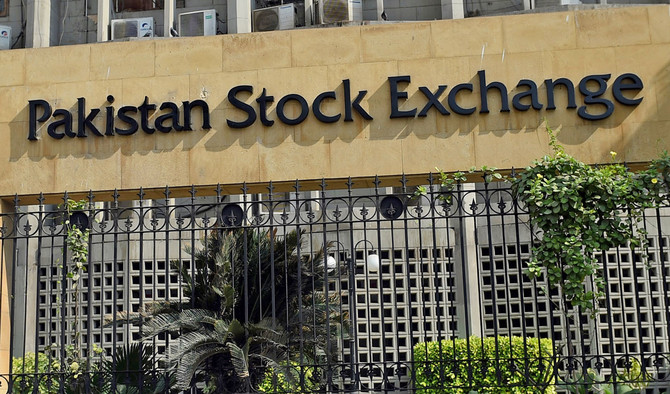
The Pakistan Stock Exchange (PSX) remains as a crucial support point in the monetary scene of Pakistan. It fills in as the essential stock exchange in the nation, offering a stage for organizations to raise capital and financial backers to exchange protections. This article dives into the set of experiences, design, tasks, and the present status of the PSX, featuring its importance in Pakistan’s monetary framework.
History of the Pakistan Stock Exchange
Early Starting points
The starting points of the Pakistan Stock Exchange can be followed back to the foundation of the Karachi Stock Exchange (KSE) in 1947, soon after Pakistan acquired autonomy. The KSE was the first and biggest stock trade in the nation, trailed by the foundation of the Lahore Stock Exchange (LSE) in 1970 and the Islamabad Stock Exchange (ISE) in 1992.
Consolidation and Development of PSX
In 2016, a huge achievement was accomplished with the consolidation of the Karachi, Lahore, and Islamabad stock exchange into a solitary substance, the Pakistan Stock Exchange (PSX). This combination meant to smooth out tasks, improve liquidity, and draw in more unfamiliar speculation. The brought together PSX has since assumed a urgent part in the improvement of Pakistan’s capital business sectors.
Structure and Operations
Administration
The Pakistan Stock Exchange works under the administrative oversight of the Protections and Trade Commission of Pakistan (SECP). The administration design of the PSX incorporates a Governing body, which involves delegates from the financier local area, recorded organizations, and free chiefs. The board guarantees that the PSX works straightforwardly and in consistence with administrative guidelines.
Trading Mechanism
The PSX uses an electronic exchanging framework known as the Karachi Robotized Exchanging Framework (KATS). This framework works with the proficient matching of trade orders, guaranteeing straight forwardness and diminishing the gamble of control. Exchanging meetings are isolated into three stages: pre-open, ordinary exchanging, and post-close.

Market Sections
The PSX is separated into a few market sections, including:
- Value Market: Here portions of recorded organizations are exchanged.
- Debt Market: This section manages the exchanging of government and corporate securities.
- Derivatives Market: Incorporates prospects and choices contracts in light of different fundamental resources.
- Mutual Funds Market: Gives a stage to exchanging units of shared reserves.
Listing Requirements
To be recorded on the PSX, organizations should meet explicit standards set by the SECP and the actual trade. These necessities incorporate a base settled up capital, benefit benchmarks, and consistence with corporate administration norms. Posting on the PSX offers organizations admittance to a bigger pool of capital and increased visibility among financial backers.
The Role of PSX in Pakistan’s Economy
Capital Formation
The PSX assumes a urgent part in capital development by empowering organizations to raise finances through the issuance of offers and bonds. This interaction upholds business development, work creation, and generally monetary development. By giving a system to reserve funds to be directed into useful ventures, the PSX adds to the proficient designation of assets inside the economy.
Wealth Creation and Investment Opportunities
For individual and institutional financial backers, the PSX offers a different scope of venture open doors. Financial backers can take part in the development of recorded organizations, acquire profits, and advantage from capital appreciation. The accessibility of different monetary instruments, like stocks, bonds, and subsidiaries, permits financial backers to broaden their portfolios and oversee risk actually.
Market Efficiency and Transparency
The PSX improves market effectiveness by giving a straightforward and controlled climate for exchanging protections. The utilization of electronic exchanging frameworks and severe administrative oversight keeps up with market respectability, decrease data lopsidedness, and safeguard financial backers from false exercises.
Attracting Foreign Investment
The PSX’s modernization endeavors and administrative changes have made it more alluring to unfamiliar financial backers. Unfamiliar portfolio speculation (FPI) assumes a huge part in the PSX, getting genuinely necessary unfamiliar trade and advancing the coordination of Pakistan’s capital business sectors with the worldwide monetary framework.
Challenges and Opportunities
Challenges
In spite of its critical commitments, the PSX faces a few difficulties:
- Market Unpredictability: Political flimsiness and monetary vulnerabilities can prompt market instability, influencing financial backer certainty.
- Restricted Market Profundity: The PSX has a somewhat modest number of recorded organizations contrasted with other developing business sectors, which restricts its market profundity and liquidity.
- Administrative Obstacles: While administrative oversight is fundamental, inordinate guideline can now and again ruin market development and advancement.
Amazing open doors
The PSX likewise has various open doors for development and improvement:
- Technological Advancements: Embracing new advances, for example, blockchain and man-made consciousness, can improve exchanging proficiency and security.
- Product Diversification: Growing the scope of monetary items, like ETFs and REITs, can draw in a more extensive financial backer base.
- Financial Inclusion: Expanding endeavors to advance monetary education and consideration can bring all the more retail financial backers into the market.
Ongoing Turns of events and Future Viewpoint
Recent Developments
As of late, the PSX has embraced a few drives to improve its tasks and draw in greater speculation:
- Introduction of ETFs: The PSX has presented Trade Exchanged Assets (ETFs), giving financial backers a minimal expense and broadened speculation choice.
- Digital Transformation: Endeavors are in progress to digitize different cycles, including account opening and exchanging, to make the market more available and easy to understand.
- Joint effort with Worldwide Trades: The PSX has marked MoUs with a few global trades to advance cross-line postings and speculations.
Future Viewpoint
The eventual fate of the PSX looks encouraging, with a few factors liable to drive its development:
- Economic Reforms: Progressing monetary changes pointed toward further developing the business climate and drawing in unfamiliar venture are supposed to help the PSX.
- CPEC Initiatives: The China-Pakistan Monetary Hall (CPEC) projects are probably going to support financial movement and set out venture open doors in different areas.
- Focus on Sustainability: Expanding consciousness of ecological, social, and administration (ESG) factors is supposed to drive interest for practical speculations.
Conclusion
The Pakistan Stock Exchange is a basic part of the country’s monetary framework, assuming an essential part in capital development, abundance creation, and market proficiency. Regardless of confronting difficulties, the PSX proceeds to advance and adjust, offering various open doors for development and improvement. With progressing changes and modernization endeavors, the fate of the PSX looks splendid, encouraging to contribute fundamentally to Pakistan monetary flourishing.













You must be logged in to post a comment Login