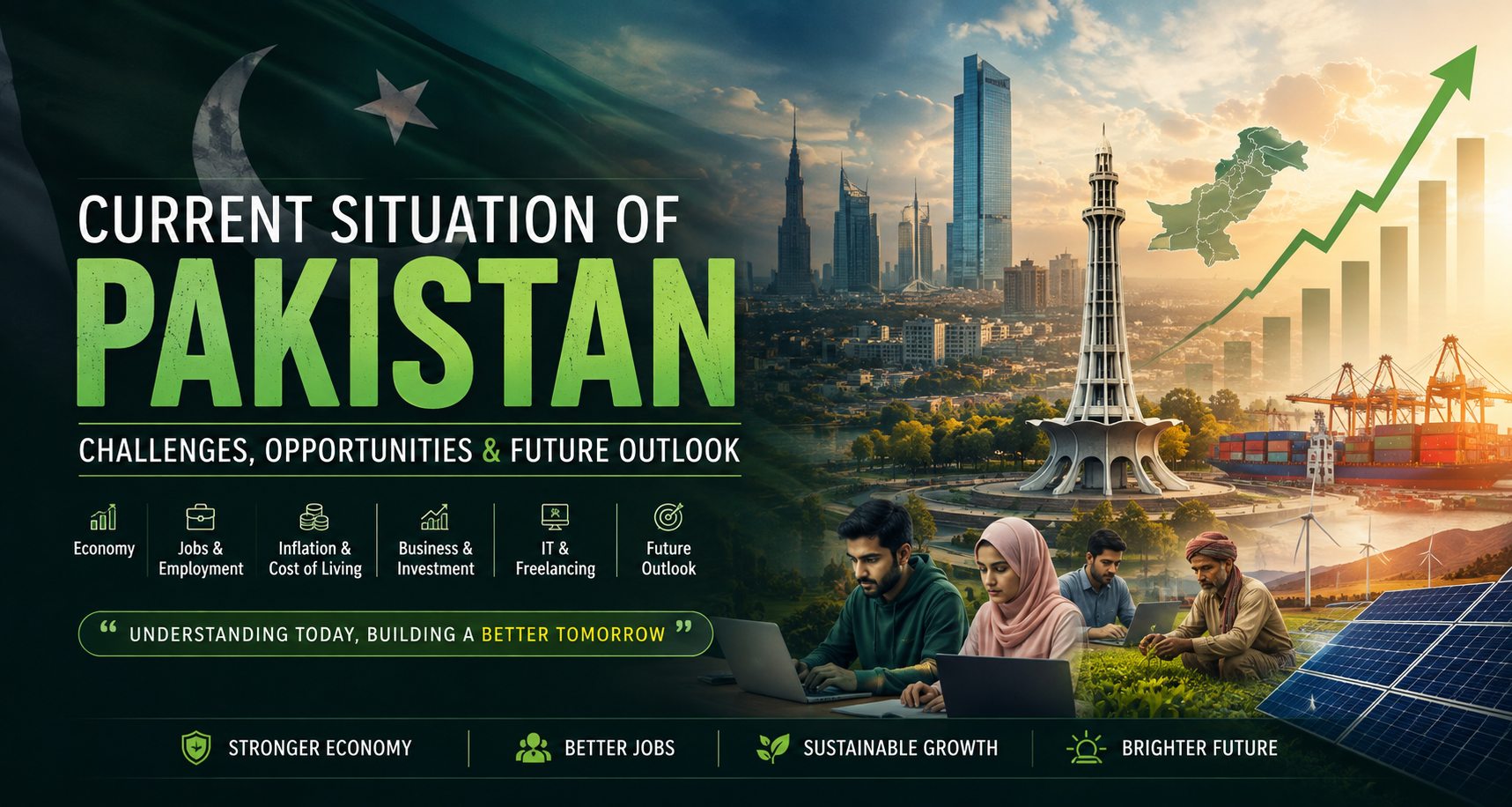
Pakistan is going through an important phase of economic and social change. The current situation of Pakistan is being shaped by inflation, employment challenges, economic reforms, political developments, the exchange rate, energy costs and the country’s efforts to attract investment. At the same time, Pakistan continues to have significant opportunities in technology, exports, freelancing, agriculture, manufacturing and digital businesses.
For ordinary people, the biggest concerns remain inflation, unemployment, cost of living, electricity prices and job opportunities. However, there are also positive developments that could support economic growth if reforms and investment continue.
Pakistan Economy and Current Economic Situation
The Pakistan economy has faced several difficult years, including high inflation, foreign-exchange pressures, rising debt servicing costs and a shortage of investment. The government and economic institutions have been focusing on improving fiscal management, increasing tax revenues, controlling expenditures and strengthening foreign-exchange reserves.
One of the biggest challenges is the cost of living in Pakistan. Food, electricity, transportation, healthcare and education expenses have placed pressure on household budgets. Even when inflation slows, consumers can continue to feel the impact because prices remain significantly higher than they were several years ago.
The performance of the Pakistani rupee also remains important. Changes in the USD to PKR exchange rate directly affect imported products, fuel, machinery and many business costs.
Inflation and Cost of Living
Inflation in Pakistan has been one of the most searched and discussed economic issues among the public. Rising prices have affected both salaried employees and small businesses.
Lower-income families are particularly affected because a larger portion of their income goes toward food, utilities and transportation. Middle-class households are also facing pressure as housing, education and healthcare costs continue to consume a significant share of monthly income.
Controlling inflation while maintaining economic growth is therefore one of Pakistan’s major economic challenges.
Jobs and Employment in Pakistan
The job market in Pakistan remains competitive. Young people entering the workforce are increasingly looking for opportunities in IT, digital marketing, software development, sales, customer support, healthcare, accounting and other professional fields.
The growth of remote jobs in Pakistan has created new opportunities. Pakistani professionals can now work with companies in the USA, UK, UAE, Canada and other international markets without physically relocating.
Freelancing is another important source of income. Platforms and international clients have helped Pakistani freelancers earn foreign currency through services such as:
- Software development
- Graphic design
- Digital marketing
- SEO
- Content writing
- Video editing
- Virtual assistance
- E-commerce services
The technology sector could become an important part of Pakistan’s future employment market if investment in digital infrastructure and skills continues.
Business and Investment Opportunities
Despite economic challenges, Pakistan remains a large consumer market with a population of more than 240 million people. This creates opportunities for businesses in e-commerce, technology, agriculture, healthcare, education, logistics and manufacturing.
Small and medium-sized businesses are particularly important for employment. Digital platforms have also made it easier for entrepreneurs to sell products and services locally and internationally.
Foreign investment remains an important priority. Greater economic stability, predictable policies, better infrastructure and improved ease of doing business could help Pakistan attract more foreign direct investment (FDI).
Pakistan’s IT and Digital Sector
The IT sector in Pakistan is one of the areas with strong growth potential. Software houses, freelancers, startups and technology companies are increasingly serving international clients.
Pakistan has a large population of young, tech-oriented workers. With appropriate training in artificial intelligence, software development, cybersecurity, cloud computing and digital marketing, the country could increase its technology exports.
The rise of AI in Pakistan is also creating new opportunities and challenges. Businesses are adopting AI tools to improve productivity, marketing, customer service and software development, while workers are increasingly required to learn new digital skills.
Pakistan and International Jobs
Another major trend is the increasing interest in jobs in Dubai, UAE jobs, Saudi jobs, Qatar jobs and international employment opportunities.
Many Pakistani professionals seek overseas employment because of higher salaries, career development and better international exposure. The Gulf region remains particularly attractive because of its proximity to Pakistan and demand for skilled workers.
However, people searching for overseas jobs from Pakistan should always verify recruiters and employers before paying any fees or sharing sensitive information. Genuine employers generally provide clear job descriptions, employment terms and official application channels.
Political and Social Challenges
The political situation in Pakistan continues to influence economic confidence and business decisions. Political uncertainty can affect investment, consumer confidence and long-term planning.
At the same time, Pakistan faces broader social challenges, including population growth, education, healthcare, urbanization and the need to create enough productive jobs for its young population.
Improving education and professional training will be essential for ensuring that Pakistan’s growing workforce can participate in higher-value industries.
What Is the Future of Pakistan?
The future of Pakistan will depend on how effectively the country addresses its structural economic problems. Sustainable growth will require stronger exports, increased investment, better tax collection, energy-sector reforms, improved governance and greater support for productive industries.
There is also significant potential in IT exports, freelancing, agriculture, renewable energy, e-commerce and manufacturing.
Pakistan’s large domestic market and young workforce are important advantages. If economic stability improves and businesses receive a more predictable environment, these strengths could contribute significantly to long-term growth.
Conclusion
The current situation of Pakistan is a combination of serious challenges and significant opportunities. Inflation, unemployment, political uncertainty and the cost of living continue to affect millions of people. At the same time, the country has opportunities in technology, exports, freelancing, entrepreneurship and international employment.
For individuals, developing digital skills, professional qualifications, English communication and international work experience can improve access to both local and global opportunities.
Pakistan’s economic recovery will not happen overnight, but continued reforms, investment and growth in productive sectors could help create a more stable and prosperous future.














You must be logged in to post a comment Login